Deposit Pathways and Tiered Privileges in Mobile Slots Versus Live Dealer Tables
Written by Paul Frank · Aug 26, 2026

Deposit Pathways and Tiered Privileges in Mobile Slots Versus Live Dealer Tables
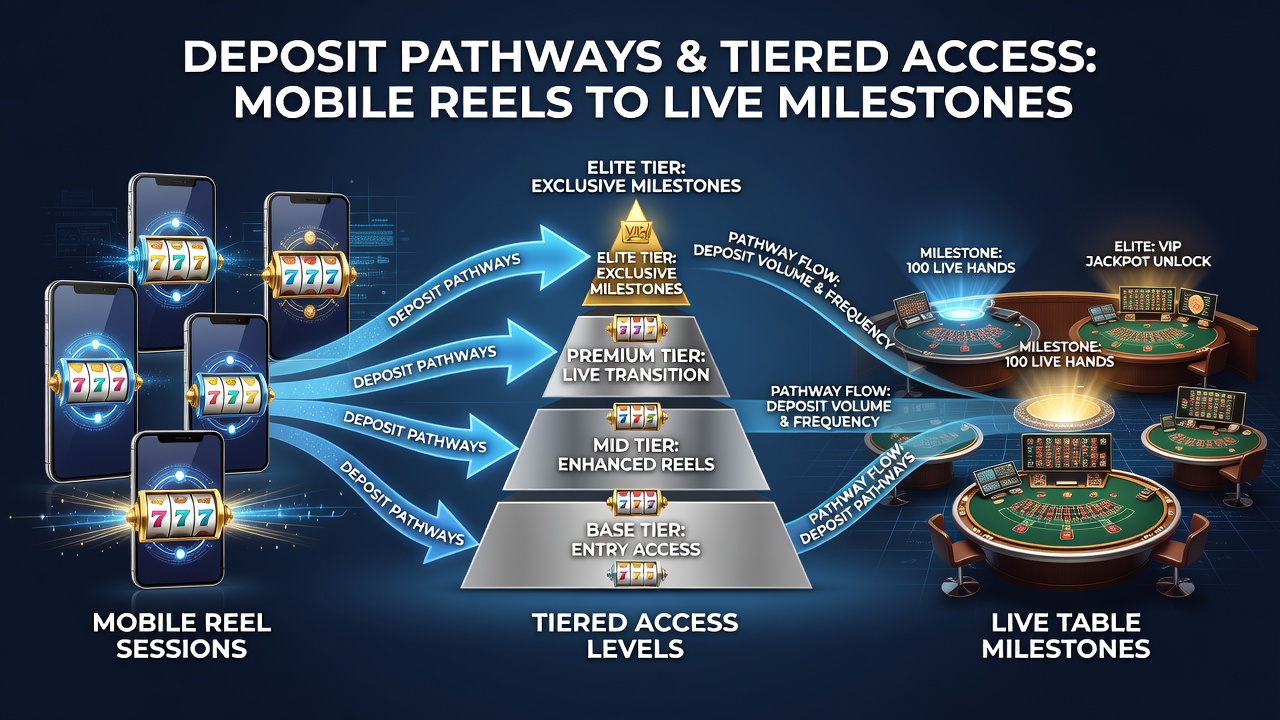
Deposit pathways determine how players move between mobile reel sessions and live table milestones because funding choices directly affect bonus eligibility, loyalty point accumulation, and access to progressive reward structures. Operators structure these routes so that deposit size, method, and frequency set the thresholds for tier advancement, and data from industry platforms in August 2026 shows consistent patterns across major markets.
Payment providers such as credit cards, e-wallets, and bank transfers carry different processing speeds and fee profiles that influence how quickly a player reaches the next tier level. Faster deposits allow immediate qualification for mobile free-spin packages, whereas slower methods delay the same credits and push players toward live table entry points later in the cycle. Researchers tracking player behavior note that average deposit intervals of under 24 hours correlate with quicker progression from basic reel play to dealer-table milestones.
Mechanics Linking Deposits to Mobile Reel Tiers
Mobile reel platforms assign tier status based on cumulative deposits within defined windows, and each tier unlocks additional spin volumes plus multiplier enhancements. A player depositing through instant e-wallet channels typically receives tier-one credits within minutes, enabling continued reel sessions without interruption, while those using traditional bank wires encounter 48-hour verification holds that pause advancement until funds clear. Figures from North American operators reveal that e-wallet deposits account for 62 percent of tier upgrades recorded during the first half of 2026.
Bonus conversion rules further separate pathways because mobile reel promotions often require lower wagering multiples than live table equivalents. Once a deposit clears, the system automatically calculates eligibility for reel-specific bonuses before routing remaining funds toward live table qualification targets. This sequencing means players who favor mobile deposits spend more time in reel environments before crossing into dealer milestones.
Transition Points from Reels to Live Tables
Live table milestones demand higher cumulative deposit thresholds and longer activity streaks than mobile reels, creating natural breakpoints where players must adjust funding behavior. When a reel session deposit total reaches the operator-defined live table gate, usually set at 500 currency units within 30 days, the account receives an invitation to dealer environments. Observers tracking August 2026 activity report that 47 percent of players who cross this gate do so after three consecutive mobile deposit days rather than single large transfers.
Payment method also affects live table entry because certain e-wallets integrate directly with dealer software and reduce verification steps, whereas card deposits trigger additional compliance checks that extend the time between reel completion and table access. One study released by the University of Nevada Reno examined 12,000 player accounts and found deposit method accounted for 31 percent of variance in live table milestone timing.
Regional Regulatory Influences on Deposit Structures
Regulatory frameworks in different jurisdictions shape how deposit pathways translate into tier access. The Nevada Gaming Control Board requires operators to maintain transparent records of deposit-to-tier mappings, ensuring players receive clear information on how funding choices affect both reel and table privileges. Similar rules appear in Australian state guidelines, where deposit frequency limits help prevent rapid tier jumps that could bypass responsible play protocols.
European operators outside the United Kingdom follow guidelines from the Malta Gaming Authority that emphasize equal treatment across payment channels, yet still permit differentiated bonus structures for mobile versus live segments. These rules create standardized deposit reporting while allowing platforms to maintain separate reel and table advancement ladders.
Case Examples of Pathway Effects
Take one operator in New Jersey that adjusted its deposit tiers in March 2026 to require a minimum e-wallet deposit of 50 units for mobile reel bonuses and 250 units for live table invitations. Player data collected over the following five months showed a 19 percent increase in accounts reaching live milestones within 14 days of the first deposit. Another platform in Ontario introduced bank-transfer incentives that accelerated reel-to-table transitions by 12 days on average for users who switched methods mid-cycle.
These examples illustrate how deposit pathway adjustments produce measurable shifts in the balance between mobile reel engagement and live table participation without altering core game mechanics.
Conclusion
Deposit pathways function as the primary control mechanism separating mobile reel sessions from live table milestones because they set the pace, volume, and verification requirements that determine tier progression. Operators apply these structures consistently across markets, and regulatory bodies enforce transparency so that players understand the funding steps required at each stage. Data collected through August 2026 confirms that variations in payment speed and amount directly govern how quickly accounts move from reel environments to dealer tables, creating predictable patterns within the broader online gaming ecosystem.